
Stormwater
Stormwater Reports and Design for Small Development in Oregon and Washington
Stormwater reports, facility design, and infiltration-based solutions for infill lots, partitions, ADUs, commercial pads, and small subdivisions, prepared to the manual your jurisdiction uses.
Stormwater is the requirement that most often surprises owners of small projects. A partition, a new commercial pad, or a home on a tight lot can trigger a full stormwater report, and the facility that report sizes can take space the layout was counting on. Getting stormwater right early decides whether the project fits the site.
Each jurisdiction in the region has its own manual, thresholds, and report format, and reviewers expect the report to follow it. Cascadia Civil prepares stormwater reports and designs facilities under the manuals that govern most small development from Salem to Vancouver, and brings modeling experience from municipal drainage studies to sites where the simple methods do not fit.
Our principal engineer's background is in hydraulic and stormwater modeling with PCSWMM, HydroCAD, and MGSFlood. Facilities are sized by analysis rather than rule of thumb, which on a constrained site often means a smaller facility and more usable land.
When a report is required
Triggers depend on impervious area, land disturbance, and the type of permit.
Requirements are set by the amount of new or replaced impervious area, the area of land disturbed, and the type of application. Thresholds differ by jurisdiction, so the first step is always to confirm which manual applies and which of its requirements the project triggers. Typical triggers include:
- Land divisions. Partitions and subdivisions usually need a preliminary stormwater report with the land use application and a final report with construction plans.
- New or replaced impervious area above the local threshold. In Portland, the Stormwater Management Manual applies to projects that develop or redevelop more than 500 square feet of impervious area.
- Hard surface and land disturbance in Western Washington. Under Ecology's manual, 2,000 square feet of new plus replaced hard surface, or 7,000 square feet of land disturbance, triggers Minimum Requirements 1 through 5. At 5,000 square feet of new plus replaced hard surface, all nine Minimum Requirements apply.
- Commercial, multifamily, and public improvement projects, which almost always require a report and facility design.
What the report contains
A report the reviewer can check against the manual.
A stormwater report documents how the project meets each requirement it triggers. Formats vary, but most reports cover the same ground:
- Project description and the requirements the project triggers
- Existing and proposed drainage basins, land cover, and impervious areas
- Soils information and infiltration testing results
- Facility selection and sizing for water quality and flow control
- Conveyance calculations and downstream analysis where required
- An operations and maintenance plan for the facilities
- Plan sheets and details that match the calculations
Manuals we work under
The manual decides the method, so we start there.
Each manual below has its own sizing methods, facility types, and report format. We work under each of them and follow the local format, so the reviewer finds what they expect where they expect it.
City of Portland SWMM
Portland's Stormwater Management Manual favors on-site infiltration and vegetated facilities, with simplified, presumptive, and performance approaches depending on project size and complexity. Reports are reviewed by Environmental Services.
Clackamas WES
Water Environment Services stormwater standards apply within its service area in Clackamas County, with requirements for water quality treatment, flow control, and low impact development approaches.
Clean Water Services
In urban Washington County, the CWS Design and Construction Standards govern stormwater, including low impact development approaches, hydromodification requirements, and vegetated corridor protection along sensitive areas.
City of Salem
Salem's Public Works Design Standards require green stormwater infrastructure to the maximum extent feasible, supported by infiltration testing and a stormwater report for most development.
Clark County / Ecology SWMMWW
In Clark County, Vancouver, and other Southwest Washington jurisdictions, stormwater follows Ecology's Stormwater Management Manual for Western Washington as adopted locally, with continuous-simulation modeling for flow control.
Timeline and cost
What drives the timeline and cost of a stormwater report.
Two lots of the same size can need very different stormwater work. These are the factors that set the scope:
- Which manual applies and how many of its requirements the project triggers
- Whether the soils infiltrate. Sites that cannot infiltrate need lined facilities, detention, or an approved discharge, and usually more analysis
- Site size, slope, and the number of drainage basins
- Whether downstream analysis or a connection to the public storm system is required
- Whether infiltration testing or a geotechnical report has already been done
- How settled the site plan is, and how many review cycles the jurisdiction runs
We scope each report after a short review of the site and the governing manual, rather than quoting a standard fee.
What’s included
Stormwater, start to finish.
Analysis & reporting
- Requirement and threshold review for the governing manual
- Infiltration testing coordination
- Preliminary stormwater reports for land use applications
- Final stormwater reports for permit
- Hydrologic modeling (HydroCAD, MGSFlood, PCSWMM)
- Downstream and conveyance analysis
Design
- Infiltration trenches, drywells, and soakage facilities
- Rain gardens, planters, and bioretention
- Detention and flow control facilities
- Dispersion and low impact development approaches
- Operations and maintenance plans
- Erosion and sediment control plans
How it works
From first question to finished project.
Confirm the manual and triggers
We identify the governing manual and which requirements the project triggers, ideally before the site plan is fixed.
Test the soils
Infiltration testing, coordinated with a geotechnical engineer where the manual requires one, tells us whether the site can infiltrate. That is the single biggest factor in facility size.
Size and place the facilities
Facilities are modeled and placed together with the grading and utility design, not added after it.
Write the report
The report follows the jurisdiction's format, with calculations that match the plan sheets.
Respond and close out
We answer review comments and provide the post-construction inspection or certification some jurisdictions require.
Related services
Related projects
Stormwater Reports work in Oregon and Washington.
Land Development
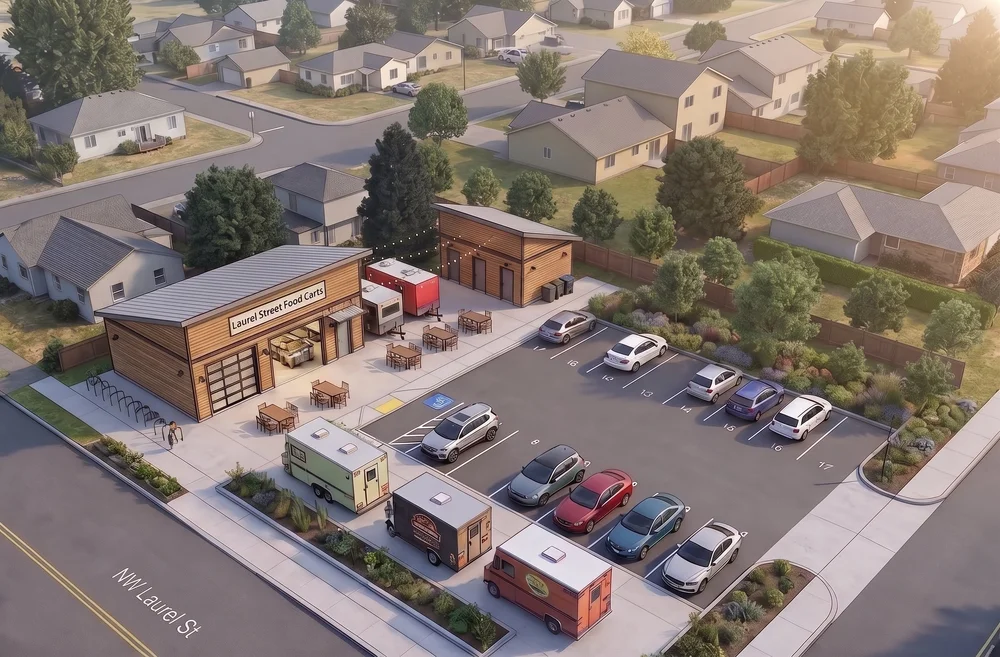
First Street Food Cart Pod: Site Civil and Infiltration Design in Downtown Scappoose
Scappoose, Oregon
Land Development / Water Resources
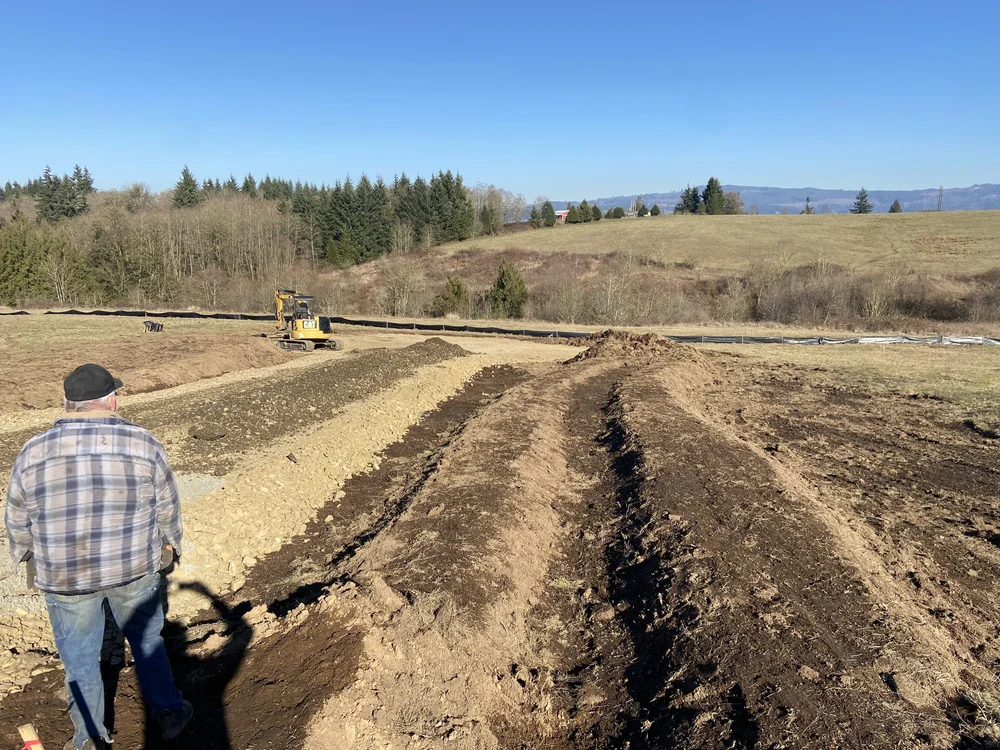
Tide Creek Rural Subdivision: Clustered Home Sites, Private Road, and Wetland Avoidance
Deer Island, Oregon
Land Development / Permitting
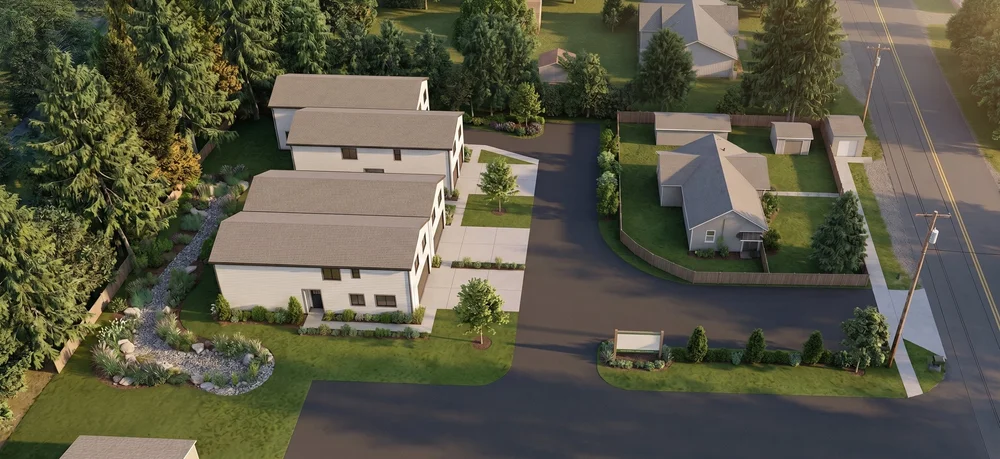
37th Avenue Infill Partition for Two New Duplexes on a Constrained Salem Lot
Salem, Oregon

Land Development / Water Resources
NE 14th Place Infill Residence: Bioretention and Dispersion on a Non-Infiltrating Lot
Bellevue, Washington
Completed by a Cascadia Civil principal engineer at a previous firm.
Municipal / Water Resources
West Taft Basin Stormwater Study: PCSWMM Flood Modeling and Capital Recommendations
Lincoln City, Oregon
Delivered by our principal engineer while at a previous firm.
Questions
Frequently asked questions.
Do I need a stormwater report for my project?
It depends on the jurisdiction and how much impervious area you are adding or replacing. In Portland, projects that develop or redevelop more than 500 square feet of impervious area must meet the Stormwater Management Manual. In Western Washington, 2,000 square feet of new plus replaced hard surface is the common threshold under Ecology's manual. Land divisions almost always require a report. We can confirm the requirements for a specific site.
What if my site does not infiltrate?
Facilities can be lined and designed to filter and detain runoff before it discharges to a public storm system or another approved location. That usually takes more space or a larger structure, which is why infiltration testing should happen before the site plan is fixed.
Can stormwater be addressed before the land use application?
Yes, and it should be. Many jurisdictions require a preliminary stormwater report with a land division or site plan application, followed by a final report with construction plans. Starting at concept also keeps the facility from consuming a lot or a unit after approval.
Do I need a geotechnical engineer for infiltration testing?
Sometimes. Some manuals accept infiltration testing by the civil engineer for small facilities, while others require a geotechnical engineer, especially for larger facilities, slopes, or poor soils. We coordinate testing to meet the manual's requirements.
How much does a stormwater report cost, and how long does it take?
It depends on the manual, the soils, the site size, and how settled the site plan is. A single-lot report and a subdivision report with downstream analysis are very different scopes. We provide a project-specific proposal after reviewing the site.
Start a project
Need a stormwater report?
Send the address, the jurisdiction, and a site plan if you have one. We will confirm which manual applies and what the report needs to cover.